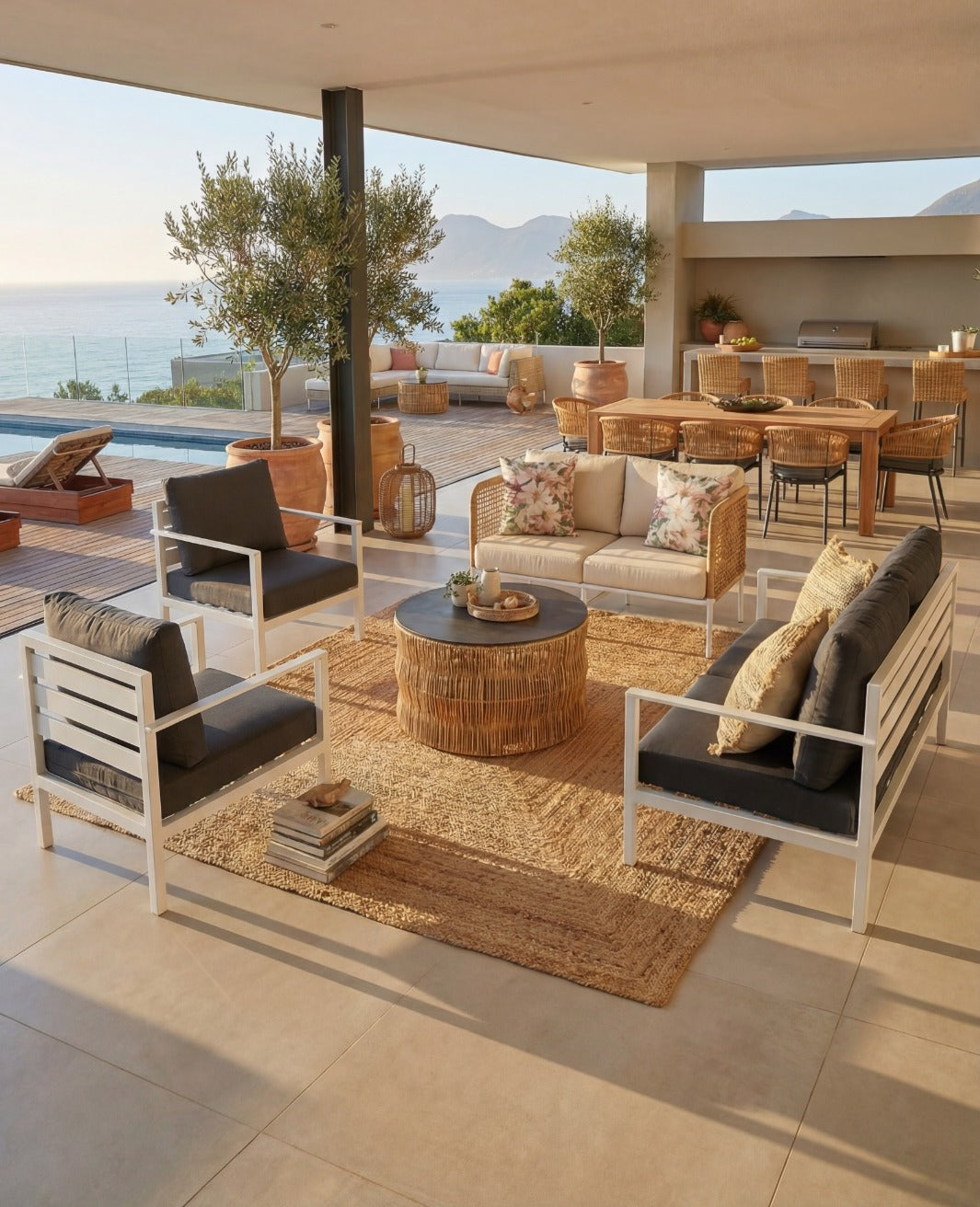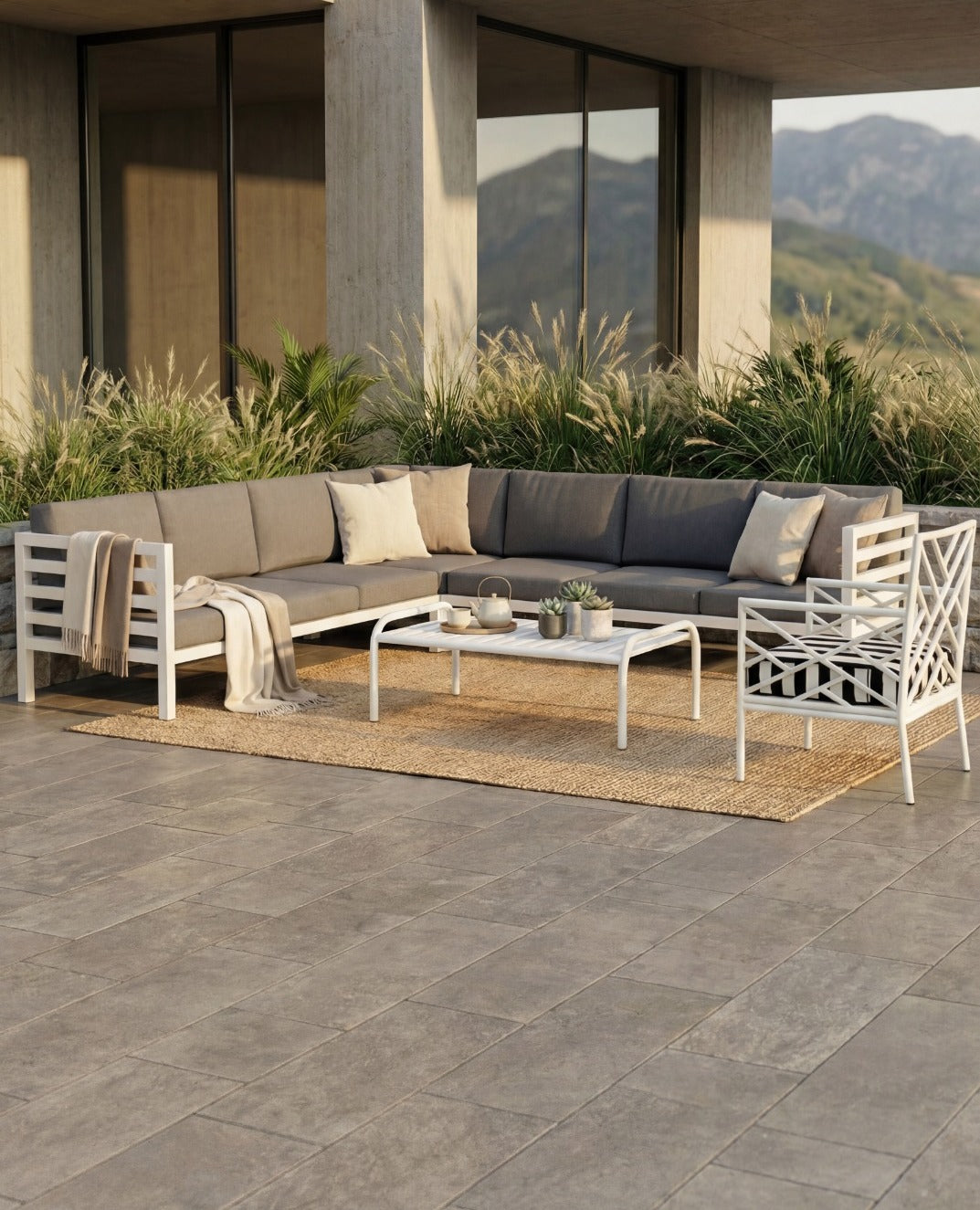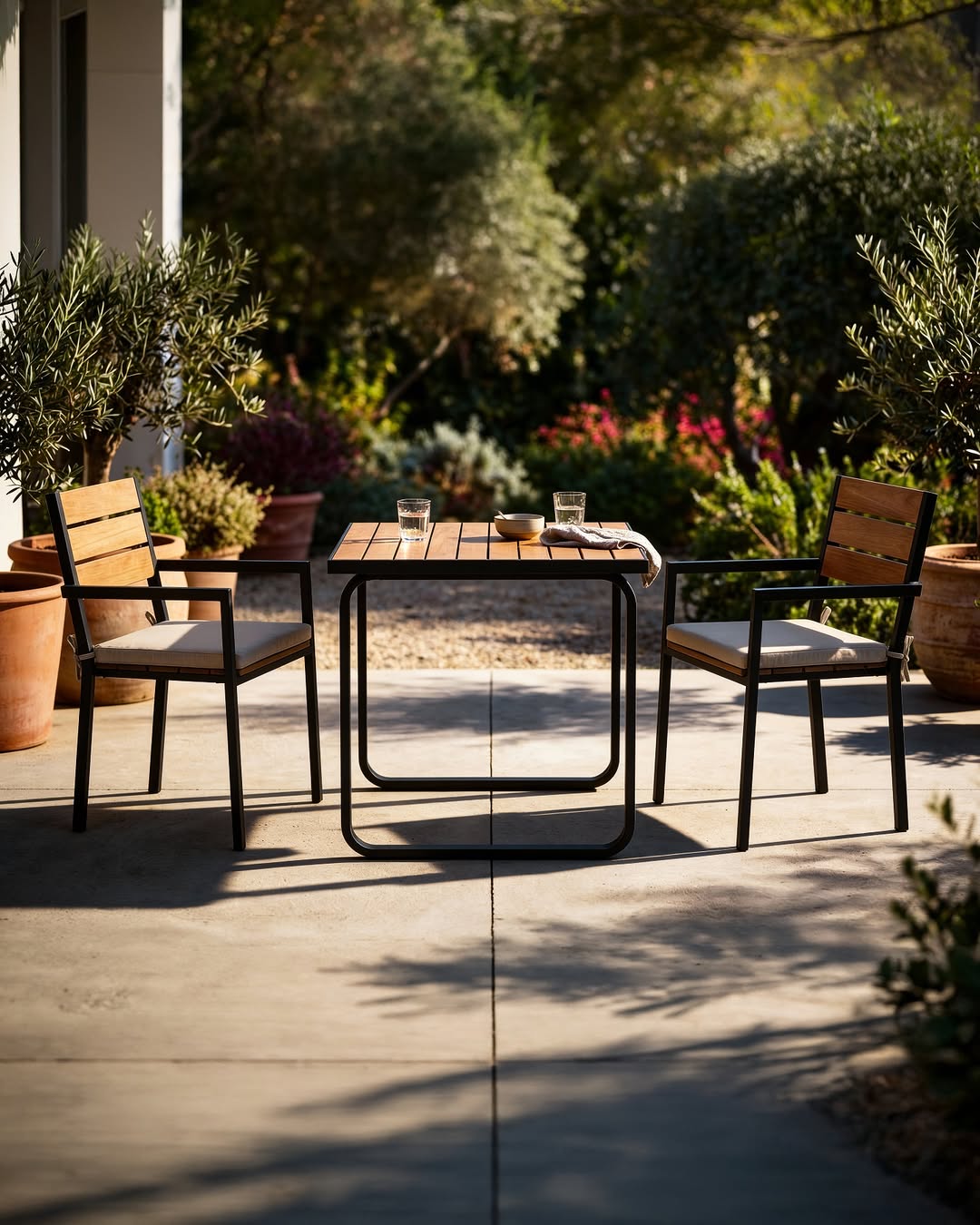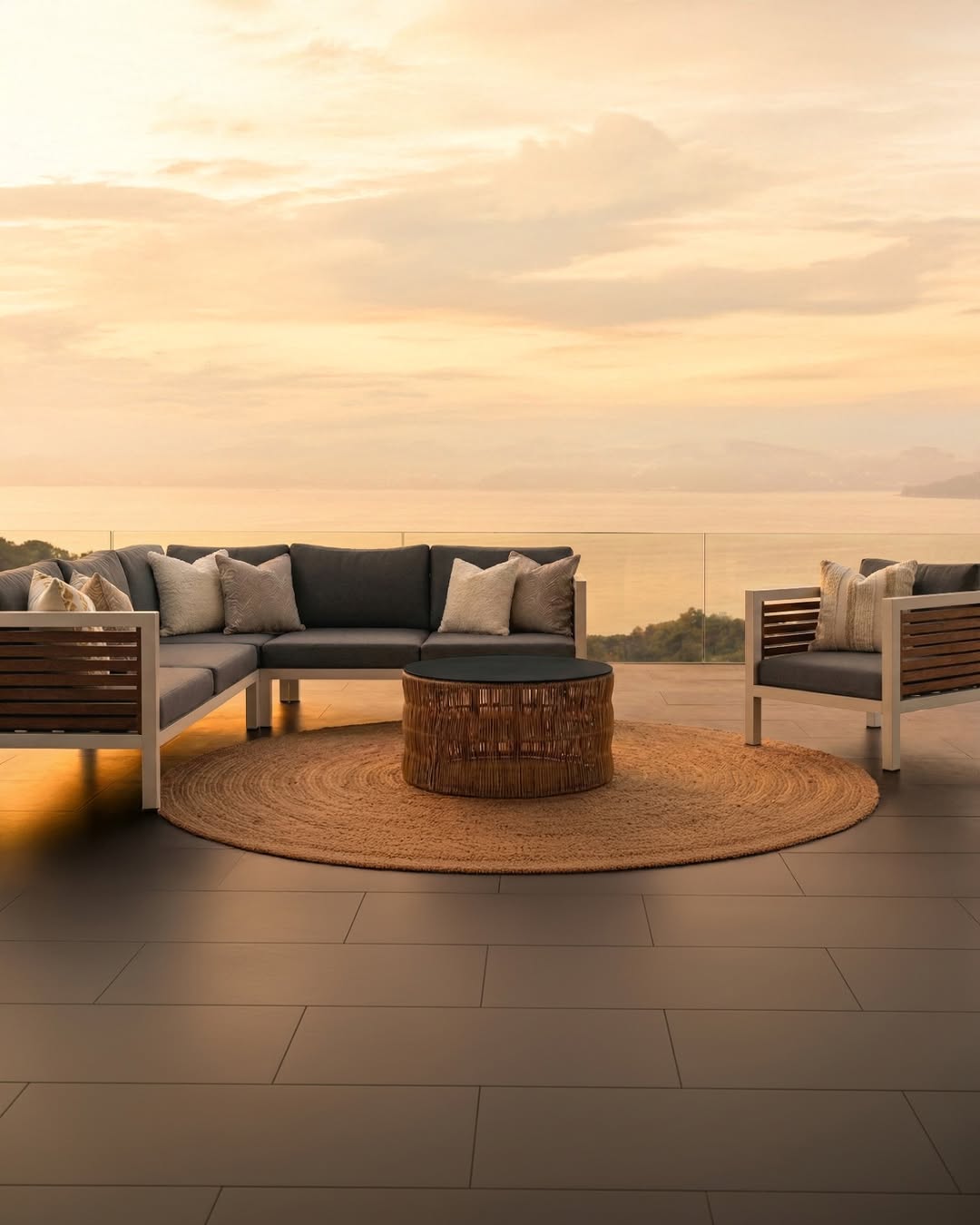

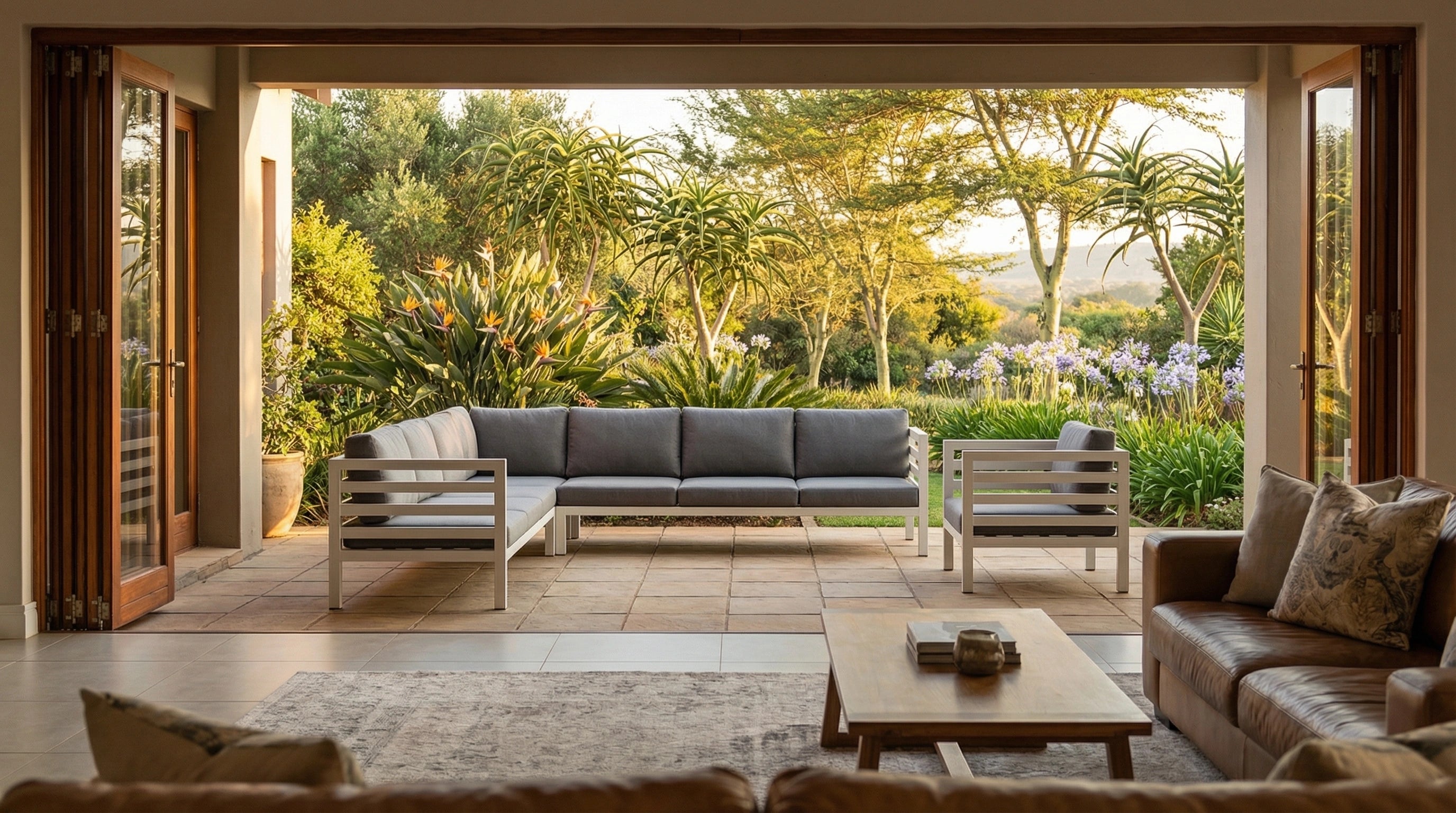
A seamless indoor-outdoor living space with folding glass doors opening onto a furnished terrace surrounded by lush greenery
LIFESTYLE

Indoor-Outdoor Living: Styling Spaces That Flow

By Ikonik Luxury Furniture, Editorial Team5 min read

The most captivating homes do not end at a doorframe. They dissolve into the landscape — a polished concrete floor giving way to limestone pavers, a linen sofa echoed by deep-cushioned outdoor seating just beyond the glass, the same warm palette threading from hallway to terrace without interruption. When inside and outside speak the same language, you stop noticing where one finishes and the other begins. That, precisely, is the point.

In South Africa, where the climate practically insists you live outdoors, this idea is not aspirational — it is architectural common sense. Our homes have always gravitated toward the garden, the stoep, the braai area that doubles as a second living room. Yet true indoor-outdoor flow demands more than simply opening a set of sliding doors. It requires intention: a shared material vocabulary, a considered colour story, furniture that belongs in both worlds, and a willingness to let nature participate in the design rather than merely serve as a backdrop.

This guide walks through the principles that make a space feel genuinely continuous — from the visual tricks that extend sightlines to the practical realities of weatherproofing your investment. Whether you are redesigning a Constantia villa or rethinking a Johannesburg courtyard, the goal is the same: a home that breathes.

Visual Continuity: The Thread That Ties Inside to Out

Flow begins with the eye. If your interior is dressed in cool greys and polished chrome, and the terrace switches abruptly to warm teak and terracotta, the transition jars — no matter how beautiful each space is on its own. The most successful indoor-outdoor schemes share a core palette and let it migrate across the threshold.

Start with materials. If your kitchen island is honed granite, consider the same stone — or one close in tone and texture — for the outdoor bar counter. If your living-room floor is pale oak, a limestone or travertine paver in a similar warm neutral will carry the rhythm outside without demanding an exact match. The aim is kinship, not uniformity. A material family, not a material clone.

Colour works the same way. Choose three to four anchoring tones — say, warm white, sand, charcoal and a muted olive — and let them recur in cushions, planters, tableware and textiles on both sides of the glass. When the palette is consistent, you can afford to let textures vary: smooth indoors, more tactile and robust outdoors. The coherence comes from colour; the interest comes from surface.

Sightlines matter enormously. Arrange indoor furniture so that the eye is drawn through the opening to a focal point beyond — a sculptural olive tree, an outdoor fireplace, a water feature catching late-afternoon light. When sitting inside, the garden should feel like an extension of the room, not a separate view. This single principle, applied consistently, makes even a modest home feel twice its size.

Furniture for the Threshold: Pieces That Belong Everywhere

The transition zone — that blurred strip where covered terrace meets open garden, where the bifold doors fold back and the floor plane continues — is the trickiest area to furnish. Too delicate, and your pieces will not survive their first Cape storm. Too rugged, and they look marooned when the doors close and the space becomes an extension of the living room again.

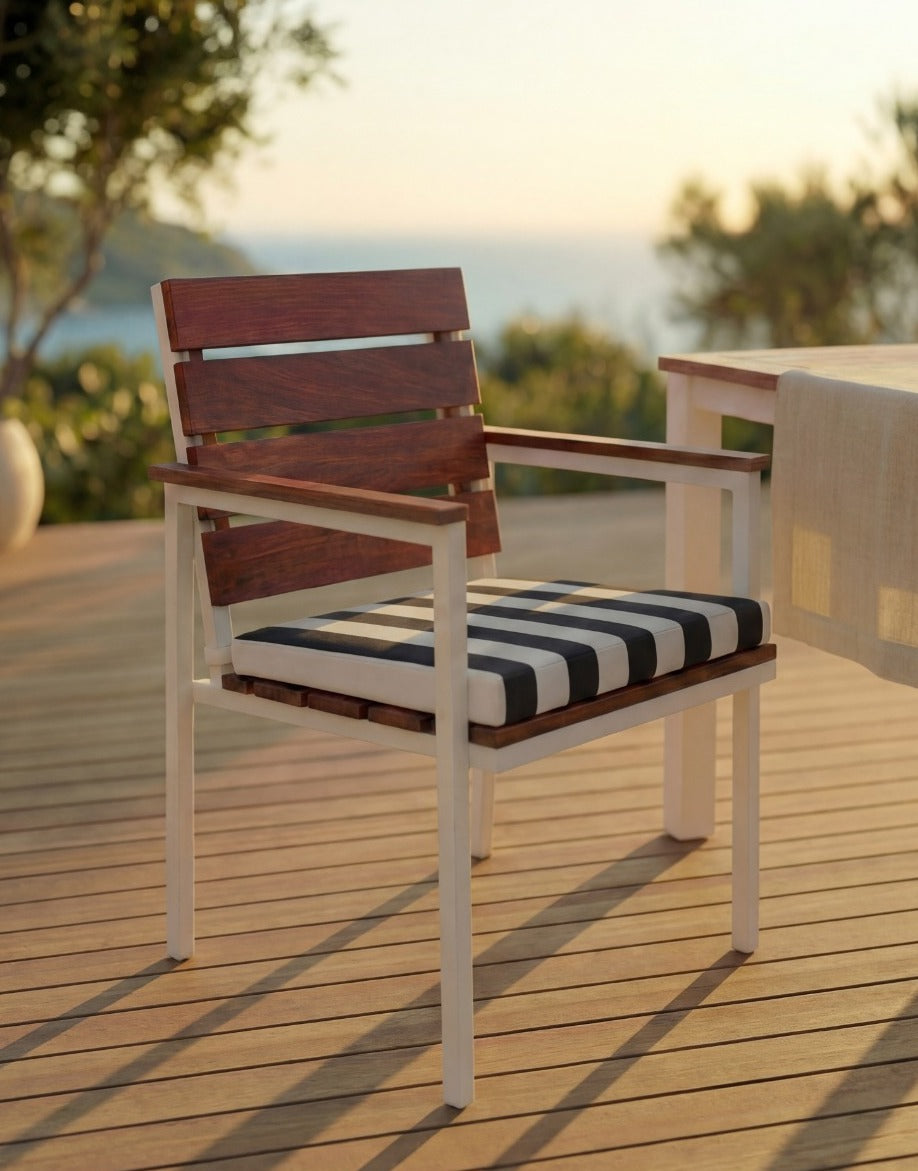
The answer lies in materials engineered for both worlds. Powder-coated aluminium frames pair beautifully with solution-dyed acrylic cushions: weatherproof enough for year-round outdoor use, refined enough to sit beside an indoor sofa without apology. Polywood — recycled high-density polyethylene moulded to resemble timber — offers the warmth of wood with none of its maintenance anxiety. It will not crack in the Highveld sun, warp in coastal humidity, or demand annual sealing.

Scale your transition furniture to match the interior pieces it neighbours. If your indoor sofa is deep-seated and generously proportioned, a slim metal bistro set on the terrace will feel like an afterthought. Instead, choose outdoor modular seating at a comparable depth and seat height so the conversation flows as easily as the sightline. Side tables, too, should echo the proportions used inside — a chunky concrete cube outdoors can mirror a marble-topped drum table within.

“A home that flows is not one without walls — it is one where the walls have learned to step aside.”

Greenery and Nature: The Living Link

Nothing connects inside to outside more powerfully than plants. A fiddle-leaf fig beside the window, a row of potted strelitzia on the terrace, a creeping jasmine trained along the pergola — these are not decorations. They are the connective tissue between architecture and landscape, softening hard edges and pulling the garden into the home.

Indoors, choose species that echo what grows beyond the glass. If your garden features indigenous restios and wild grasses, bring smaller-scale textural plants inside — a ponytail palm, a cluster of succulents in a rough concrete planter, trailing string-of-pearls on a high shelf. The visual rhyme between interior greenery and exterior planting reinforces the sense of a single, continuous environment.

Outdoors, use planted containers as architectural punctuation. A pair of oversized terracotta pots flanking the threshold signals arrival without closing the space off. Raised planters in Corten steel or raw concrete can double as low walls that define zones — dining here, lounging there — without interrupting the view. Choose evergreen species for structure and seasonal flowering plants for moments of surprise: agapanthus in summer, the burnt-orange flush of a coral tree in spring.

The most sophisticated indoor-outdoor schemes treat greenery as furniture. A mature tree becomes a canopy; a hedge becomes a wall; a bed of lavender becomes a fragrant threshold. When you allow plants to perform spatial roles, the boundary between designed interior and natural exterior dissolves entirely.

Entertaining Seamlessly: Kitchen to Terrace

The true test of indoor-outdoor flow is a dinner party. Can your guests move from the kitchen island to the terrace bar without feeling they have changed venue? Can the cook plate up inside and serve outside without navigating an obstacle course of steps, narrow doors and mismatched levels? If so, your space has passed the ultimate flow test.

Design the kitchen-to-terrace route as a single hospitality corridor. A pass-through window or fold-back servery hatch between the kitchen and outdoor dining area makes service effortless and keeps the cook part of the conversation. If a structural opening is not possible, a rolling bar cart — stocked, styled and ready — bridges the gap. Position the outdoor dining table within easy reach of the kitchen threshold, not at the far end of the garden.

Lighting ties the two spaces together after dark. Carry the same colour temperature from interior pendants to exterior festoon lights or recessed step lighting. Warm white — around 2700K — is universally flattering and creates an unbroken amber glow from kitchen bench to candlelit table. Avoid the common mistake of bright, clinical light inside and dim, yellowish light outside; the contrast severs the connection the moment the sun sets.

Tableware, too, should travel. If your indoor dinnerware is matte stoneware in earthy tones, choose outdoor plates in the same family — perhaps a slightly more robust melamine with a similar glaze finish. Linen napkins work on both sides of the door; simply opt for a heavier weave outdoors. These small consistencies accumulate, and by the time dessert arrives, nobody can quite remember whether they are sitting inside or out.

Practical Considerations: Protecting the Investment

Romance aside, outdoor furniture lives a harder life than anything indoors, and any honest guide must address the realities of maintenance, weather protection and material longevity.

Drainage is the unglamorous foundation of every successful outdoor room. Ensure your terrace has a slight gradient — typically a one-percent fall away from the house — so that rainwater does not pool around furniture legs or seep back toward interior floors. Permeable paving or strategically placed channel drains keep the surface dry and prevent that dispiriting morning-after swamp after a Highveld thunderstorm.

Sun protection extends the life of fabrics and timber alike. A pergola with retractable shade cloth, a mature tree canopy, or a well-positioned sail shade all reduce UV exposure without sealing the space off from the sky. For cushions and soft furnishings, choose solution-dyed acrylics rated to at least 1 500 hours of UV exposure; they hold colour far longer than piece-dyed alternatives. When not in use, store cushions in ventilated outdoor storage boxes — damp trapped in a sealed container breeds mould faster than any rainstorm.

Material maintenance varies, but the principle is the same: little and often beats an annual rescue mission. Wipe down aluminium frames with soapy water monthly. Oil hardwood once a season — twice if you are coastal. Hose polywood after dust storms; its non-porous surface resists staining, but grit left to bake in the sun will scratch the finish over time. Outdoor rugs should be shaken, hosed and hung to dry regularly. These are small rituals, and they repay the effort many times over.

Finally, consider covers. Fitted, breathable furniture covers protect frames and cushions during the off-season or extended wet spells without trapping condensation. They are not the most elegant solution, but they are among the most effective — and a well-maintained outdoor space, when the covers come off in September, is worth every moment of care.


Featured in This Article

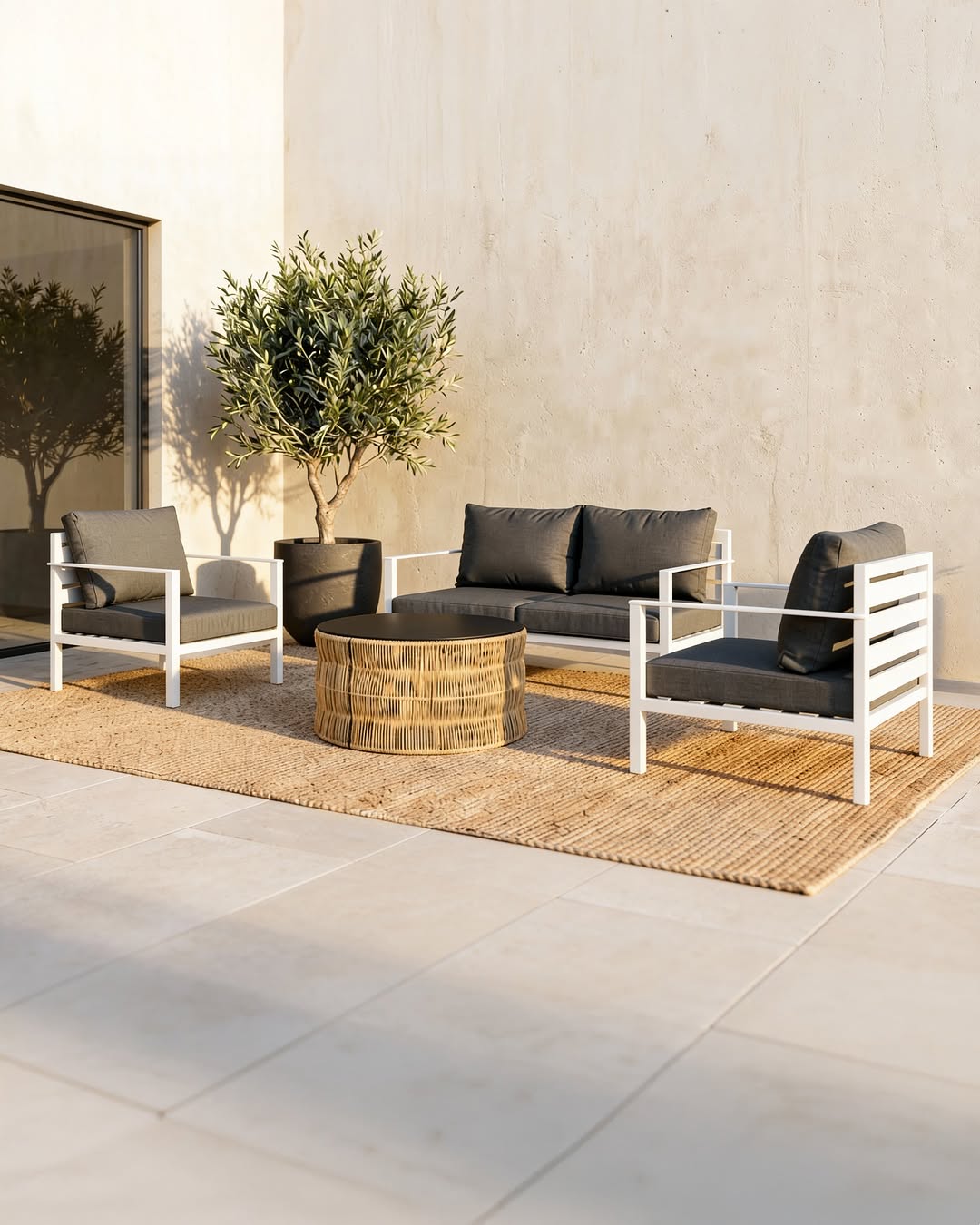
Outdoor living space styled with contemporary furniture and natural textures

@ikonik_luxury_furniture

Follow Us on Instagram
Instagram post by Ikonik Luxury Furniture