Dining Table Guide: Choosing the Right Shape and Size for Your Room
By Ikonik Luxury Furniture, Editorial Team//6 min read
Few pieces of furniture carry as much significance as the dining table. It is where the morning begins — coffee cups warming palms, newspapers spread wide — and where the evening draws to a close over the last glass of wine. It is where children do homework, where negotiations happen over Sunday roasts, where friendships deepen across a shared meal. Choosing the right dining table is not a matter of filling a room. It is a matter of shaping how you live in it.
Yet for all its importance, the dining table is one of the most commonly misjudged purchases in any home. Too large for the room, it overwhelms the space and makes every meal feel cramped. Too small, and it never quite accommodates the life you actually lead — the extra guests, the birthday suppers, the long Saturday lunches that stretch into the afternoon. The wrong shape can disrupt the flow of a room entirely, while the right one transforms it into the most magnetic space in the house.
This guide is designed to help you navigate those decisions with confidence. We will examine the merits of every major table shape, walk through the sizing principles that designers rely upon, and explore how material choice influences the character of a room. By the end, you will know precisely what belongs in your dining space — and why.
Round, Rectangular or Oval: Which Shape Suits Your Room?
The shape of your dining table determines far more than its footprint. It governs sightlines, conversation flow and the spatial rhythm of the entire room. Each form has its strengths, and the best choice depends on the architecture of your space, the way you entertain and the atmosphere you wish to create.
Round Tables
A round dining table is the great equaliser. There is no head of the table, no hierarchy of seating — everyone faces the centre, and conversation flows naturally in every direction. For intimate gatherings of four to six, a round table is unrivalled. It suits square rooms particularly well, softening angular architecture and creating a sense of warmth and enclosure. A round table measuring 120cm comfortably seats four; at 150cm, you can accommodate six without anyone feeling squeezed.
The limitation is scale. Beyond six seats, a round table demands a significant diameter — 180cm or more — and the centre becomes unreachable. If you regularly host large dinner parties, a round table may not be the most practical choice. But for daily family meals and smaller gatherings, its intimacy is unmatched.
Rectangular Tables
The rectangular table is the workhorse of dining furniture, and for good reason. It accommodates the widest range of room shapes, slides neatly against a wall when space is tight, and extends gracefully with leaves or butterfly mechanisms for larger occasions. A standard rectangular table of 180cm seats six comfortably; at 240cm, you have room for eight with generous elbow clearance.
Rectangular tables excel in long, narrow dining rooms and open-plan living spaces where the table anchors a zone without overwhelming it. They pair naturally with benches on one side — a useful trick for fitting more guests and creating a relaxed, convivial atmosphere. The visual weight of a rectangular table is substantial, however, so in smaller rooms, choose a design with slender legs and a light profile to avoid a heavy feel.
Oval Tables
The oval table is often overlooked, yet it combines the best qualities of both shapes. It offers the generous surface area of a rectangle with the soft, conversational flow of a round. An oval table moves beautifully through a room — no sharp corners to catch a hip as you pass, no rigid geometry to interrupt the space. It is an exceptional choice for rooms that serve multiple purposes, where traffic flow matters as much as seating capacity.
“The shape of your table is not merely a design decision. It is a social one — it determines who speaks to whom, who feels included, and how the evening unfolds.”
How to Size Your Dining Table: The Rules Designers Follow
Getting the size right is the single most important decision you will make. A beautifully crafted table that overwhelms its room — or disappears within it — is a missed opportunity. Fortunately, the principles are straightforward once you know them.
The 90cm Clearance Rule
Every dining table needs at least 90 centimetres of clearance between the table edge and the nearest wall or piece of furniture. This allows chairs to be pulled out comfortably and for people to move behind seated guests without the awkward sideways shuffle that plagues cramped dining rooms. If your room also serves as a thoroughfare — an open-plan space where people walk past the table regularly — increase that clearance to 120cm on the passage side.
Seating Capacity by Size
Allow approximately 60cm of table width per person. This is the minimum for comfortable dining; 70cm is generous and ideal for longer meals where elbows need room to rest. Use these benchmarks when selecting your table:
120cm round — seats 4 comfortably
150cm round — seats 6 comfortably
180cm rectangular — seats 6 (3 per side)
200cm rectangular — seats 6–8
240cm rectangular — seats 8 (4 per side)
300cm rectangular — seats 10–12 for grand entertaining
Measuring Your Space
Before you fall in love with a table, measure your room. Mark the table footprint on the floor with masking tape, then walk around it. Sit in an imaginary chair. Pull it back. Can someone pass behind you? Does the room still breathe? If the tape makes you feel hemmed in, size down. A table that fits its room with breathing space will always feel more luxurious than one that fills every available centimetre.
Material Matters: How Surface Choice Shapes the Room
The material of your dining table does more than determine durability — it sets the entire mood of the space. A table in warm, oiled walnut whispers of heritage and slow evenings. A marble surface commands attention with cool, sculptural authority. A glass top opens a small room and lets a statement base take centre stage. Choose your material not only for how it performs, but for how it makes the room feel.
Solid Wood
Wood remains the most beloved dining table material for good reason. It is warm to the touch, it ages beautifully, and it absorbs the character of every meal shared across its surface. Oak offers pale, Scandinavian restraint. Walnut brings deep, chocolatey richness. Reclaimed timber carries a story in every grain. Solid wood tables are forgiving of scratches and marks — they patina rather than deteriorate — and they can be refinished when the time comes. For families, for everyday use, for a table that improves with age, wood is the natural choice.
Marble and Stone
A marble dining table is a statement piece. It brings weight, coolness and an unmistakable sense of occasion to any room. Carrara marble with its soft grey veining suits contemporary interiors; darker marbles like Nero Marquina add drama. Stone is heavy, it stains if unsealed, and it demands respect — but that is precisely the point. A marble table says that this is a room where dining is taken seriously.
Glass and Ceramic
Tempered glass tables are the ally of small spaces. They create visual lightness, allowing the eye to travel through them rather than stopping at their surface. Pair a glass top with a sculptural timber or metal base for maximum impact. Ceramic-topped tables, meanwhile, offer the aesthetic of stone with superior practicality — they resist heat, scratches and stains with remarkable resilience. For households that want the look of marble without the maintenance, ceramic is a compelling alternative.
A well-chosen table deserves a well-considered setting. The way you dress your dining table — even when no guests are expected — speaks to the life of the room. A bare table can feel austere; an over-styled one feels performative. The goal is effortless intention: a setting that looks as though it simply belongs.
The Everyday Centrepiece
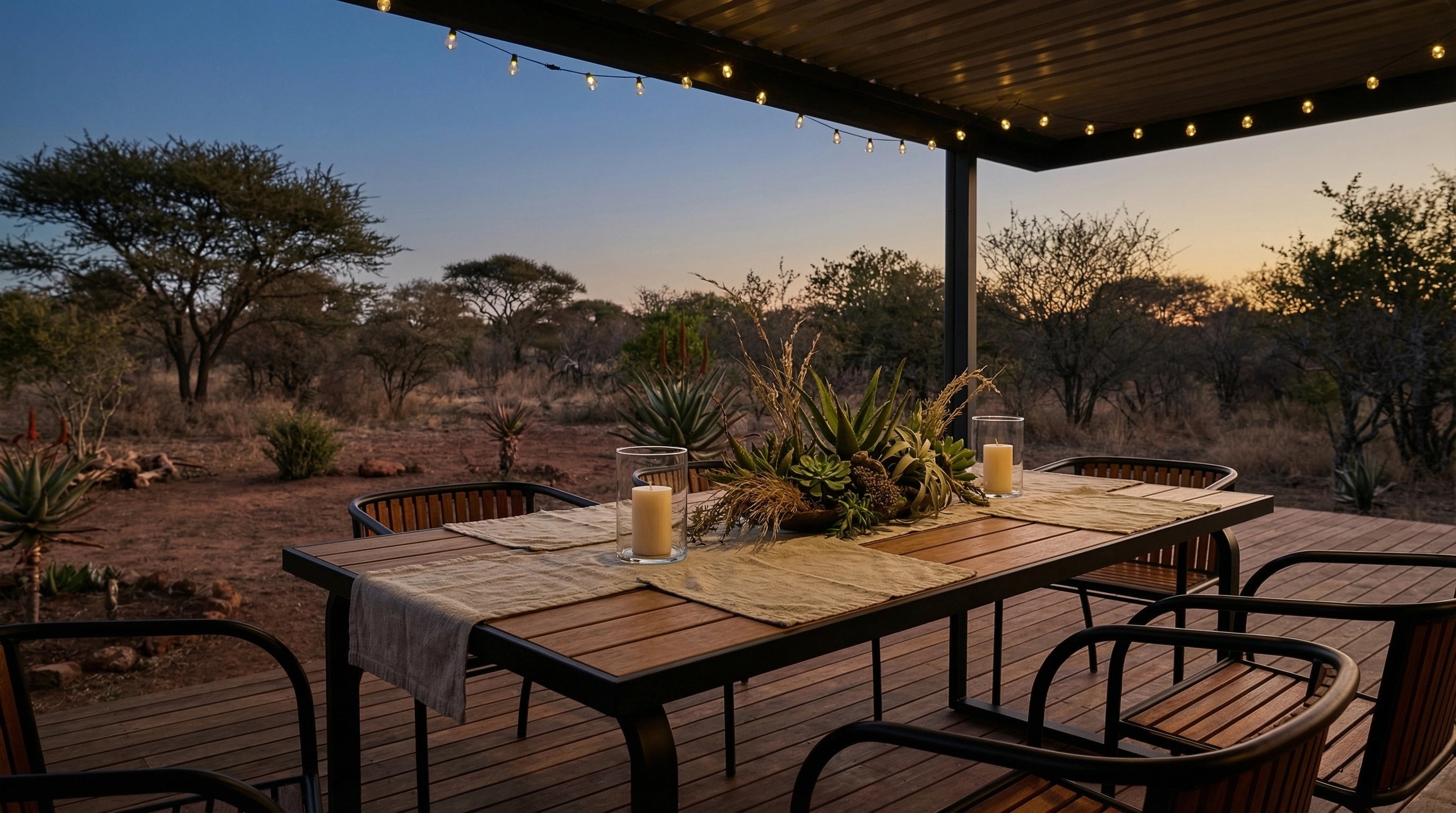
Keep it low and organic. A shallow bowl of seasonal fruit, a cluster of pillar candles at varying heights, a single sculptural vase with dried grasses or protea — these are centrepieces that live on the table between meals without demanding to be cleared. Avoid anything so tall that it interrupts sightlines across the table. The centrepiece should anchor the surface, not dominate it.
Mixing Chairs
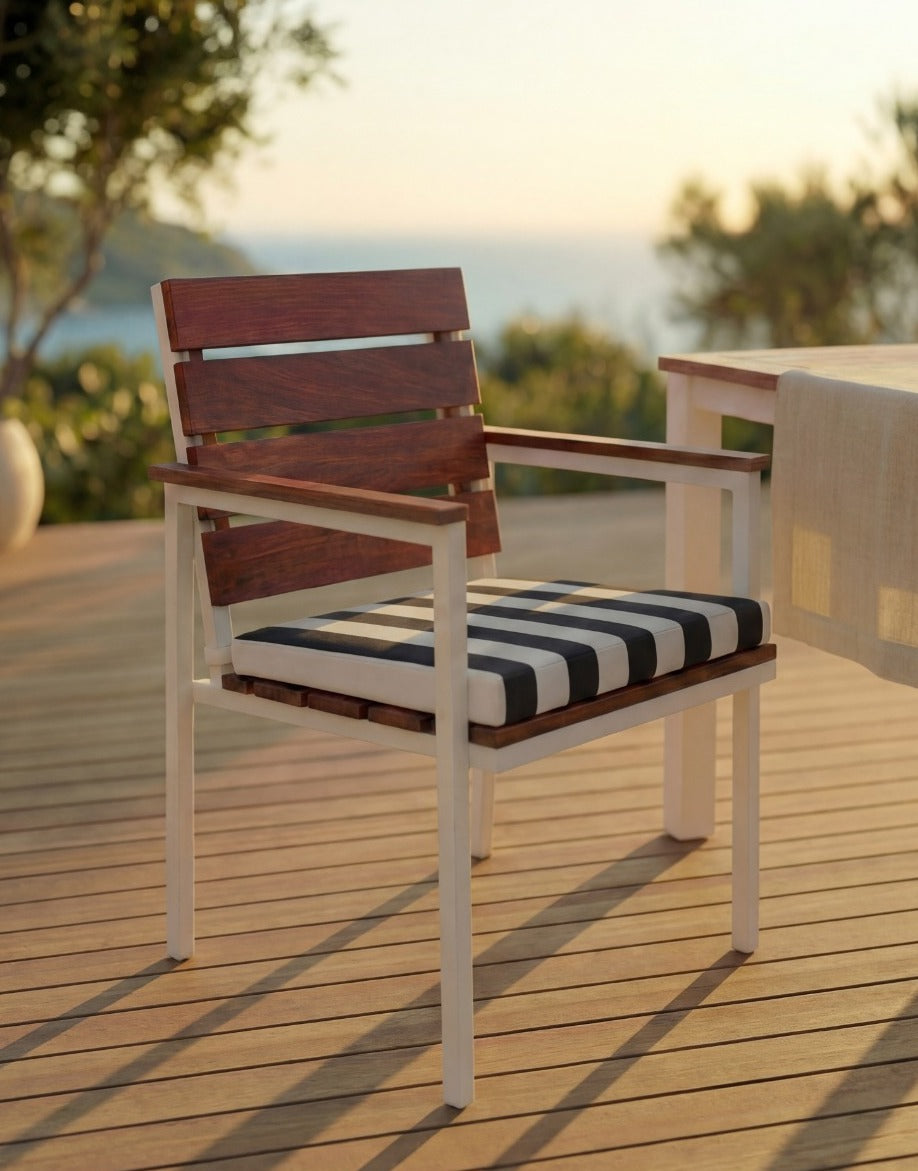
Matching dining chairs are entirely respectable, but mixing styles is where personality enters the room. A set of upholstered chairs along the sides with statement armchairs at each end creates visual hierarchy and a sense of occasion. Alternatively, a long bench on one side paired with individual chairs on the other gives a relaxed, European brasserie feel that works beautifully in open-plan kitchens. The key is to maintain a unifying thread — material, colour or height — so the mix reads as curated rather than accidental.
Table Settings That Linger
For entertaining, layer your setting with care. Start with a linen tablecloth or runner in a natural tone — oatmeal, soft grey, warm white. Add handmade ceramic plates with visible texture, heavy-weight cutlery that feels substantial in the hand, and glassware with character (a coloured wine glass, a hand-blown tumbler). Linen napkins rather than paper, always. These details signal that the meal matters, that the gathering is worth the effort, and that the table was set with the guests — not a catalogue — in mind.
“A dining table is never truly empty. Even bare, it holds the promise of the next meal, the next conversation, the next evening that begins with 'sit down, I’ve opened something rather good.'”
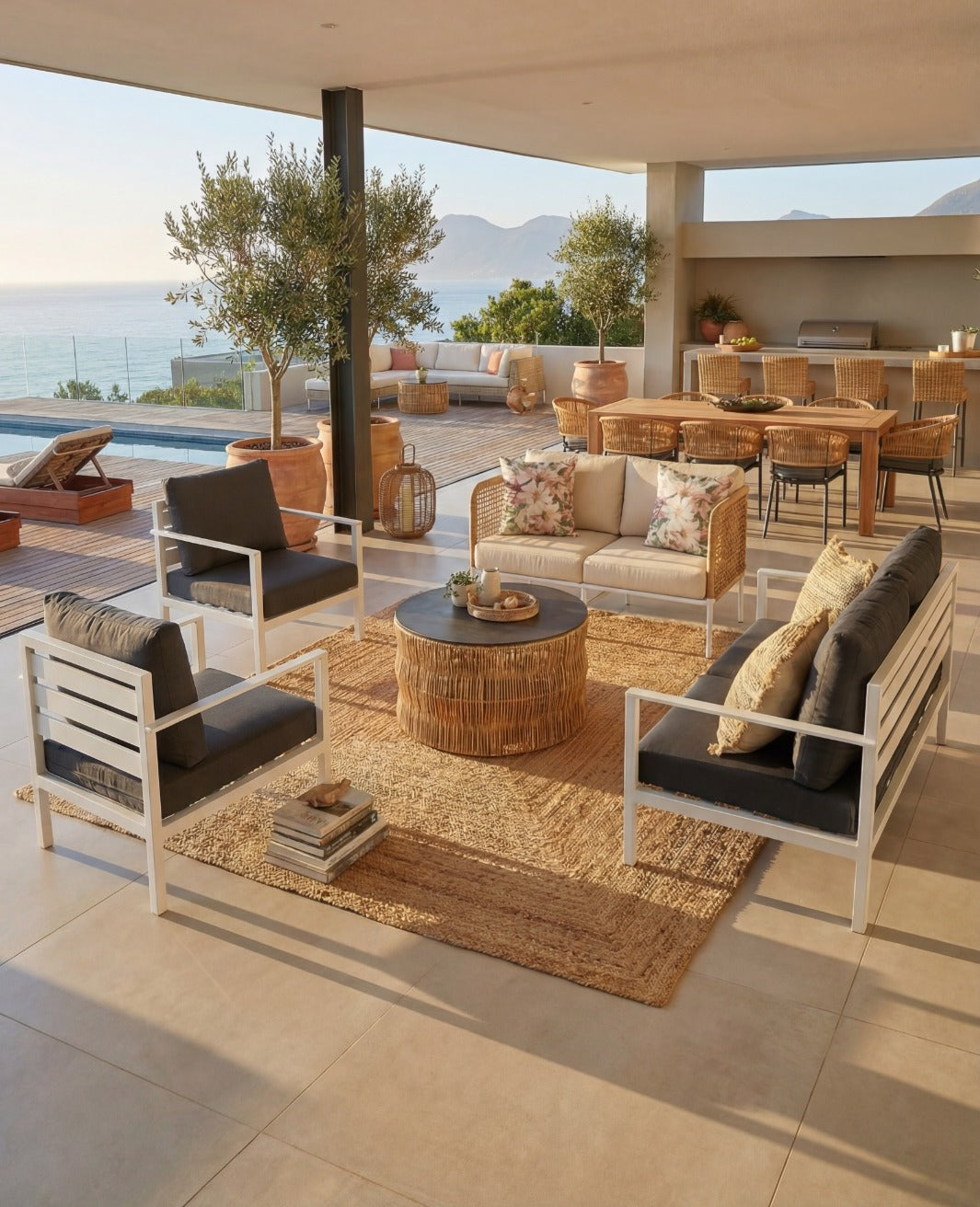
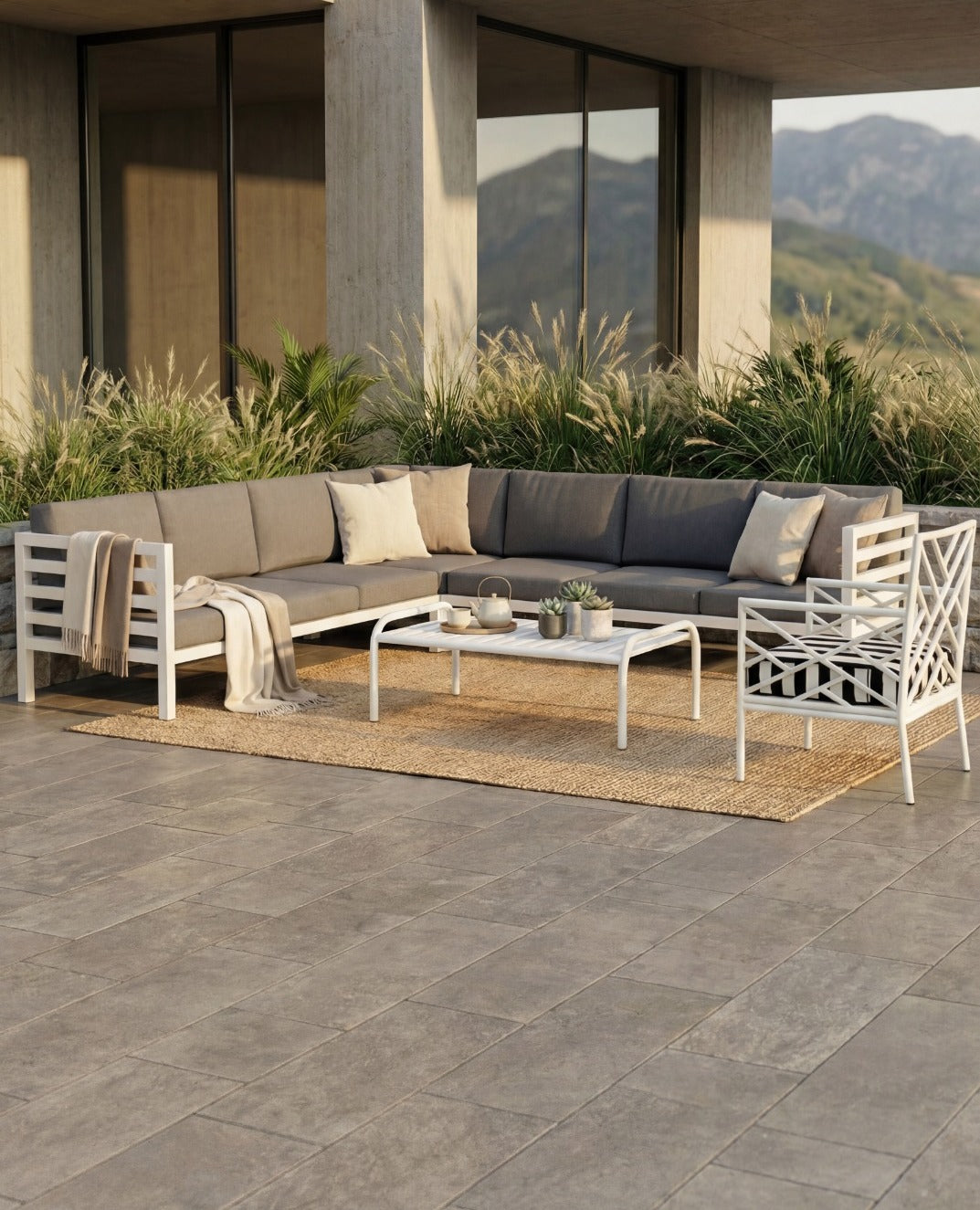
From choosing the perfect outdoor sofa to selecting weather-resistant materials, our expert guide has everything you need to furnish your outdoor spaces.