
A beautifully upholstered fabric sofa in a warm, sunlit living room with natural linen textures
ADVICE

Caring for Your Fabric Furniture: Keep It Looking New

By Ikonik Luxury Furniture, Editorial Team4 min read

Fabric furniture carries a particular warmth that no other material quite replicates. The softness of a linen-blend sofa, the textured weave of a bouclé armchair, the inviting depth of a velvet cushion — these are the pieces that make a house feel genuinely lived in. Yet fabric, for all its beauty, asks something of you in return: a little regular attention, a measure of care, and the knowledge of what to do when life inevitably leaves its mark.

The good news is that maintaining fabric upholstery is neither complicated nor particularly time-consuming. A handful of weekly habits and the confidence to act quickly when spills occur will keep your pieces looking remarkably fresh for years. What follows is a straightforward guide — no gimmicks, no expensive gadgets — just practical advice drawn from upholstery specialists and the experience of living well with beautiful furniture.

Your Weekly Care Routine

The single most effective thing you can do for fabric furniture is vacuum it regularly. Dust, crumbs and loose fibres settle into the weave every day, and left unchecked they grind against the fabric and accelerate wear. Once a week, run an upholstery attachment across all surfaces — the seat cushions, the arms, the back, and especially the crevices where the frame meets the padding. Use a low suction setting on delicate fabrics like velvet or chenille to avoid pulling at the pile.

Rotate and flip your seat cushions fortnightly. This distributes wear evenly and prevents those telltale depressions that mark a favourite spot. If your cushions are fixed, simply plump and reshape them by hand after each use. It takes thirty seconds and makes a remarkable difference over the course of a year.

A soft-bristled clothes brush is worth keeping nearby. A light brush in the direction of the fabric's nap lifts flattened fibres and removes surface lint without stressing the weave. For pet owners, a lint roller after each evening settles the matter of stray hair before it has a chance to embed itself into the cloth.

Spot Cleaning: The Art of Acting Quickly

Every upholstery specialist will tell you the same thing: the first sixty seconds after a spill determine the outcome. Blot immediately with a clean, dry cloth — white is best, so you can see exactly what you are lifting — and press firmly without rubbing. Rubbing pushes the liquid deeper into the padding and spreads the stain outward. Patience here is not a virtue; it is a necessity.

For most water-safe fabrics, a solution of lukewarm water and a small amount of mild washing-up liquid is all you need. Dampen a cloth — never soak it — and work gently from the outside of the stain inward. This prevents the mark from spreading into a larger ring. Rinse the area with a separate cloth dampened with plain water, then blot dry.

Before you clean any visible area, always test your solution on a hidden patch of fabric — the underside of a cushion, the back of a skirt panel, or the fabric beneath the seat. Wait ten minutes. If the colour holds and the texture remains unchanged, you can proceed with confidence. If anything shifts, stop and consult a professional.

“The first sixty seconds after a spill determine whether it becomes a memory or a permanent reminder. Blot, don’t rub — and never underestimate the power of a clean white cloth.”

Dealing With Common Stains

Red wine. Blot immediately, then cover the area generously with table salt or bicarbonate of soda. The granules draw moisture upward out of the fibres. Leave for fifteen minutes, vacuum away, and treat any residual colour with a mixture of one part white vinegar to two parts water. Blot dry thoroughly.

Coffee and tea. These tannin-based stains respond well to a solution of lukewarm water with a teaspoon of white vinegar and a drop of washing-up liquid. Apply with a cloth, working from the edges inward, and blot until the mark lifts. Avoid hot water, which can set the stain permanently into the weave.

Ink. Dab — do not wipe — with a cloth dampened with surgical spirit or isopropyl alcohol. The solvent dissolves the ink without spreading it, but test on a hidden area first, as alcohol can affect certain dyes. Replace the cloth frequently to avoid redepositing ink onto clean fabric.

Pet accidents. Remove any solids gently, then blot the area with cold water. Apply an enzymatic cleaner designed for upholstery — these break down organic matter at a molecular level and eliminate odour rather than merely masking it. Avoid ammonia-based products, which can encourage pets to revisit the same spot.

When to Call in the Professionals

There are moments when the wisest course of action is to step back and let an expert take over. If a stain has dried and set, if the fabric care label specifies dry-clean only, or if you are dealing with a particularly valuable or delicate piece, professional upholstery cleaning is a sound investment. A trained technician will assess the fabric type, test for colourfastness, and use extraction equipment that removes dirt from deep within the padding — something no domestic method can truly replicate.

As a general rule, have your most-used fabric pieces professionally cleaned every twelve to eighteen months. High-traffic sofas in family homes may benefit from an annual clean, while occasional chairs in a study or guest room can comfortably stretch to two years. The cost is modest compared to the price of replacing a sofa prematurely, and the results are invariably striking — most people are genuinely surprised by how much brighter and fresher the fabric looks afterward.

Protection: Prevention Over Cure

Sunlight is the silent adversary of fabric furniture. Prolonged UV exposure fades colours and weakens fibres over time, and the damage is irreversible once it takes hold. Position your upholstered pieces away from direct sunlight where possible, or invest in sheer curtains and UV-filtering window film to soften the light without darkening the room. If rearranging is not practical, rotate your cushions more frequently so that fading occurs evenly rather than in conspicuous patches.

Fabric protector sprays create an invisible barrier that causes liquids to bead on the surface rather than soak in. Applied once or twice a year, a quality protector gives you those crucial extra seconds to blot a spill before it penetrates the weave. Look for water-based, fluorocarbon-free formulas — they are effective without altering the hand-feel of the fabric or leaving a chemical residue.

For households with young children or pets, removable slipcovers are a remarkably practical solution that need not compromise style. A well-tailored slipcover in a durable cotton or linen blend can be machine-washed, swapped seasonally, and replaced far more affordably than reupholstering an entire piece. It is not a concession — it is intelligent design, and the best furniture makers have always understood that.


Featured in This Article

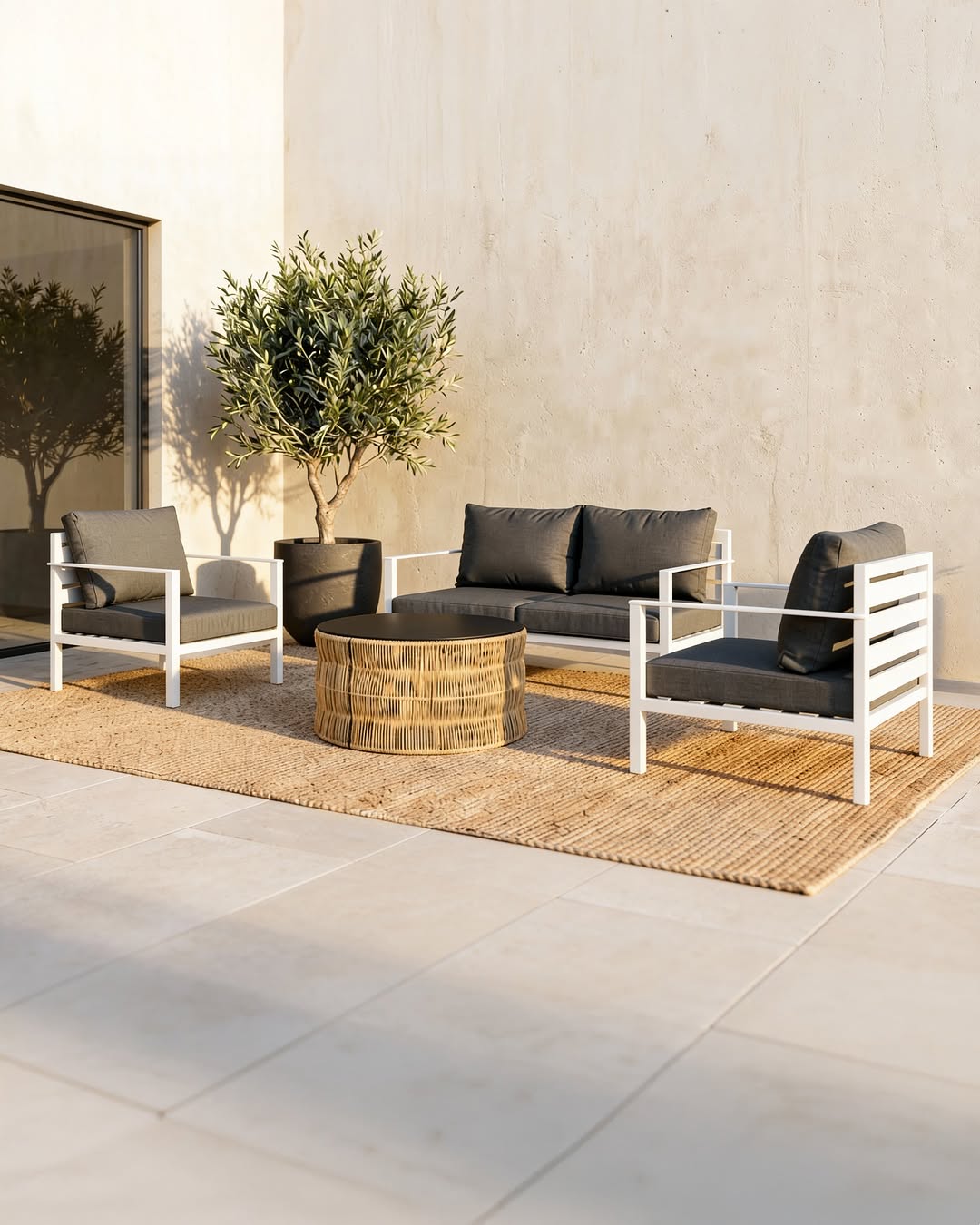
Outdoor living space styled with contemporary furniture and natural textures

@ikonik_luxury_furniture

Follow Us on Instagram
Instagram post by Ikonik Luxury Furniture